
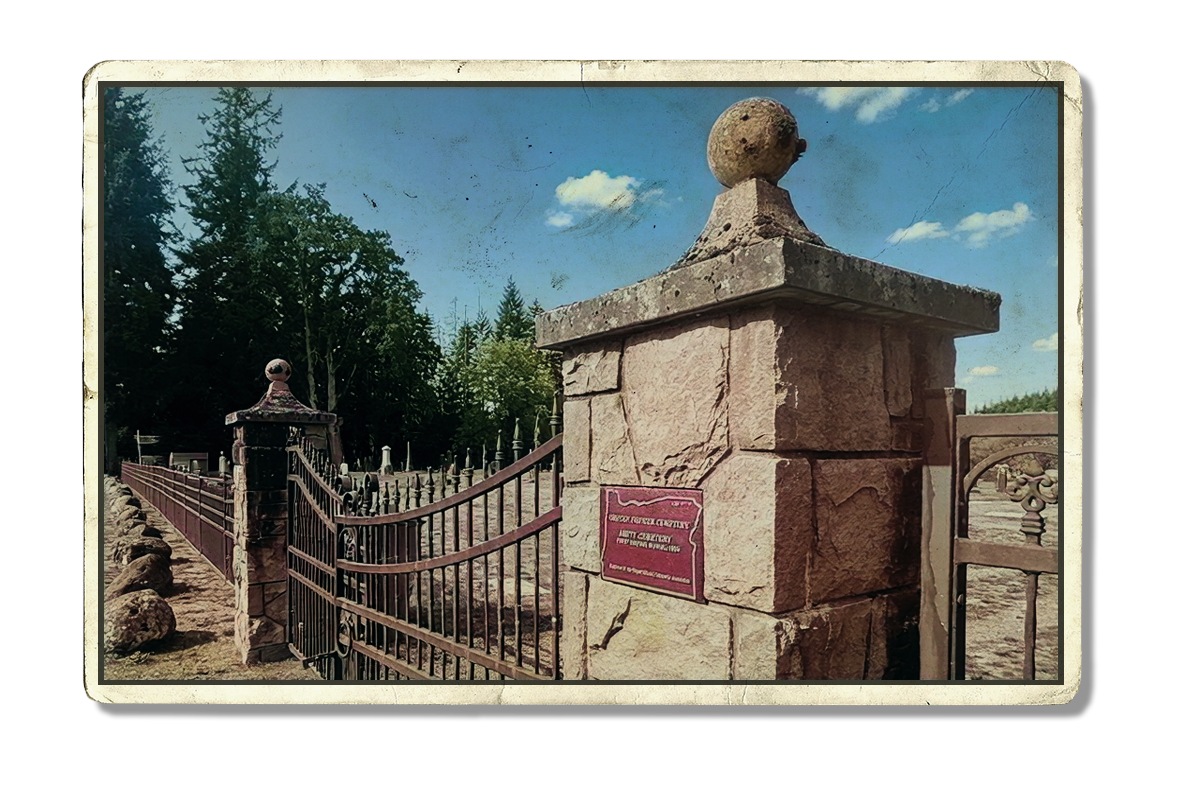
PIONEER CEMETERY
Stories Written in Stone
Pioneer Cemetery preserves the stories of people and families connected to Amity’s early history. Its grave markers recall settlers such as Willamina Craig Maley Williams, for whom the nearby town of Willamina was named, and members of families such as the Wallings, whose descendants helped shape the surrounding community.
The cemetery also holds unusual reminders of later history, including a hollow zinc-alloy grave marker, or “zinkie,” used to conceal alcohol during Prohibition. Together, these stories offer a glimpse into the lives, families, and events that shaped early Amity.
SNAPSHOT IN TIME
Photos from the past
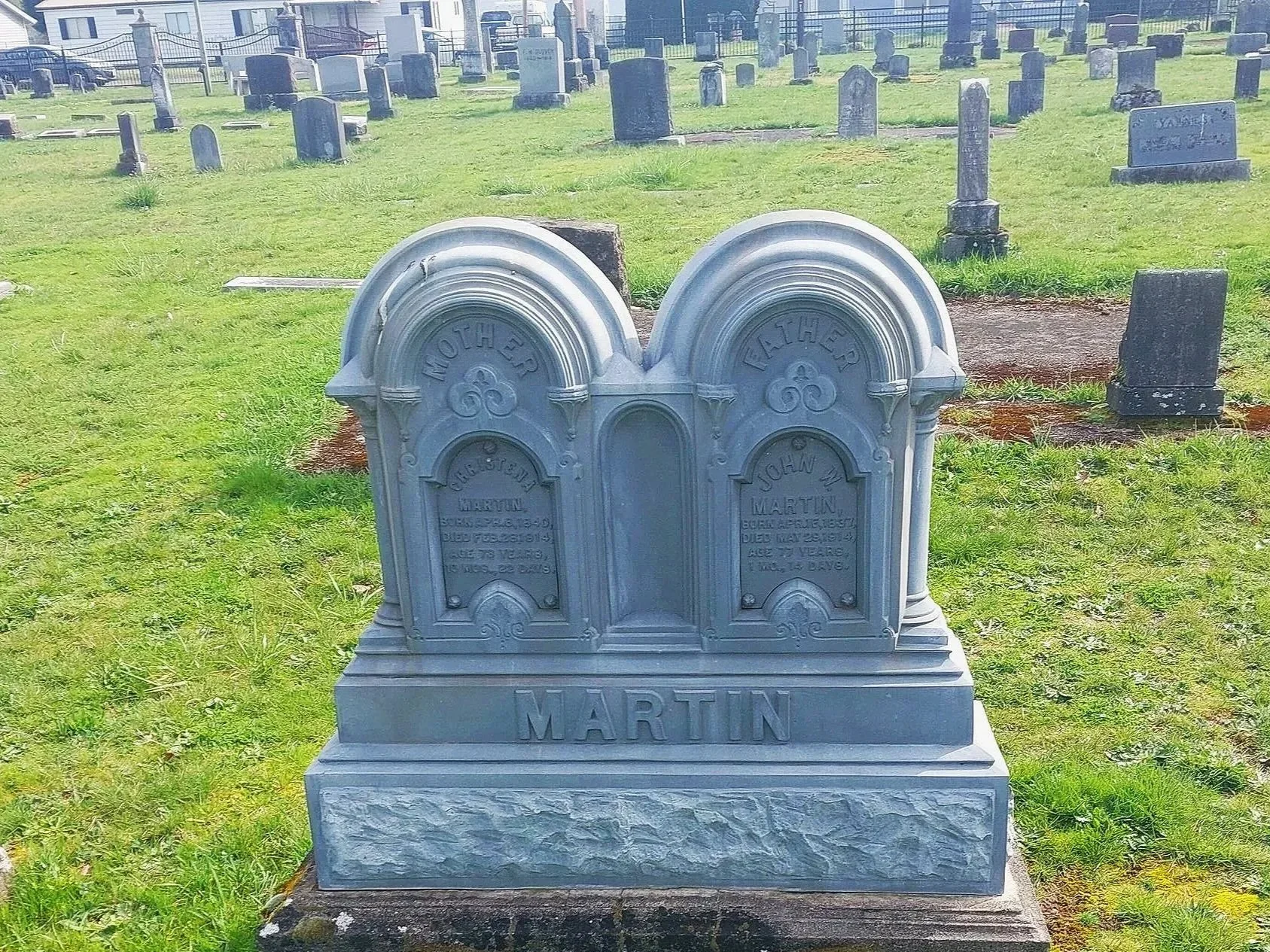
A Grave Place to Hide a Bottle
Look for this grave marker. During Prohibition, from 1920 to 1933, bootleggers used hollow grave markers like this one, made of a zinc alloy and known as a “zinkie,” to hide alcoholic beverages.
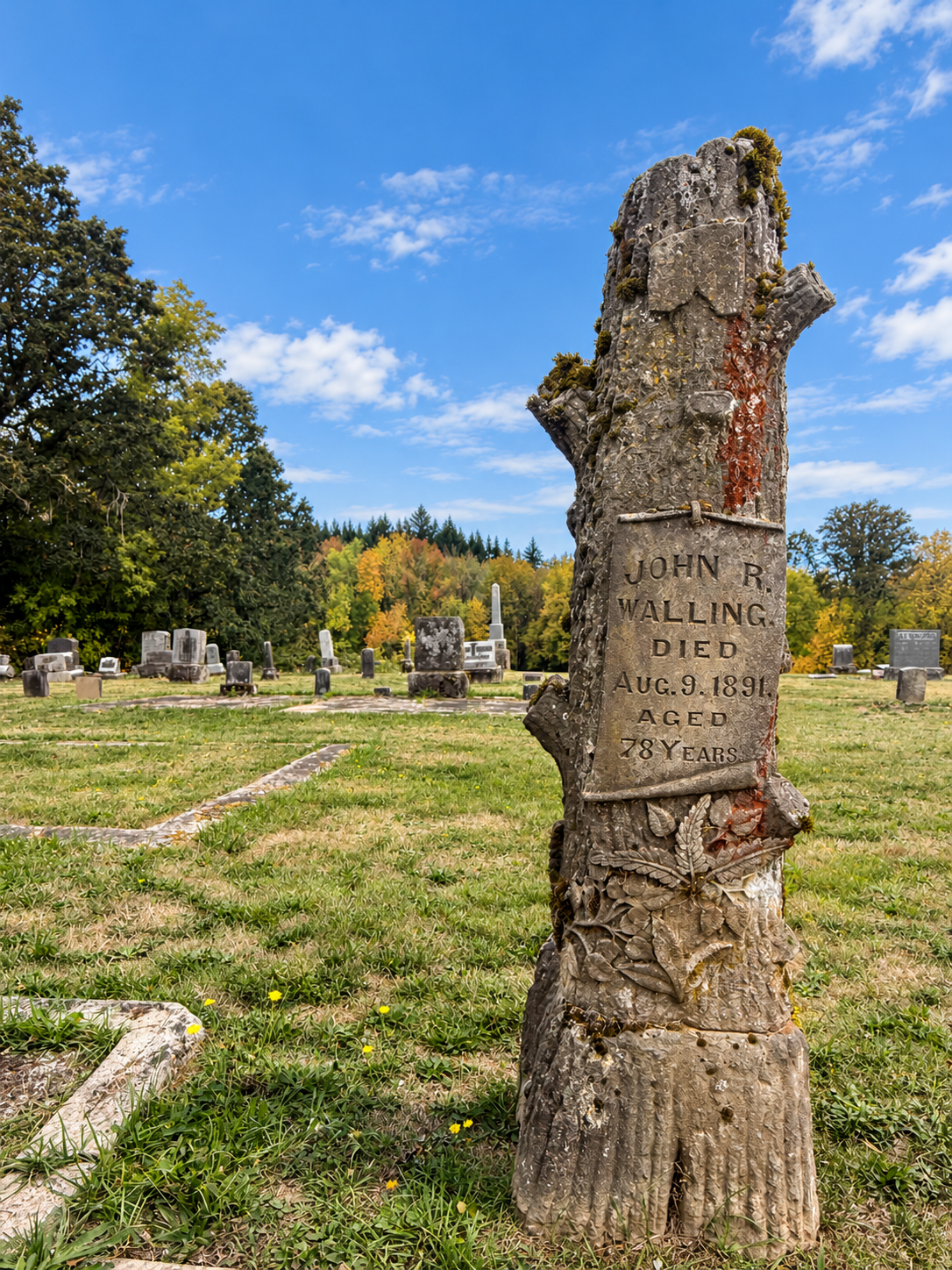
A Life Carved in Stone
This unusual gravestone marks the resting place of John R. Walling, who died in 1891 at the age of 78. Carved to resemble a tree trunk, the monument features detailed bark, branches, and leaves.
These distinctive memorials, sometimes called treestones, were popular during the Victorian era.
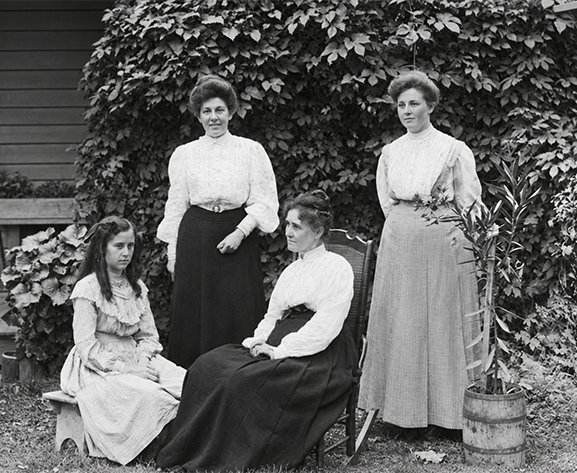
Uncovering History
From left, four of the seven Sanders sisters: Helen, Avis, Grace, and Nettie Sanders pose for a photograph in front of their family farm, south of Amity. The farm eventually became a hotel.
Yamhill County Historical Society
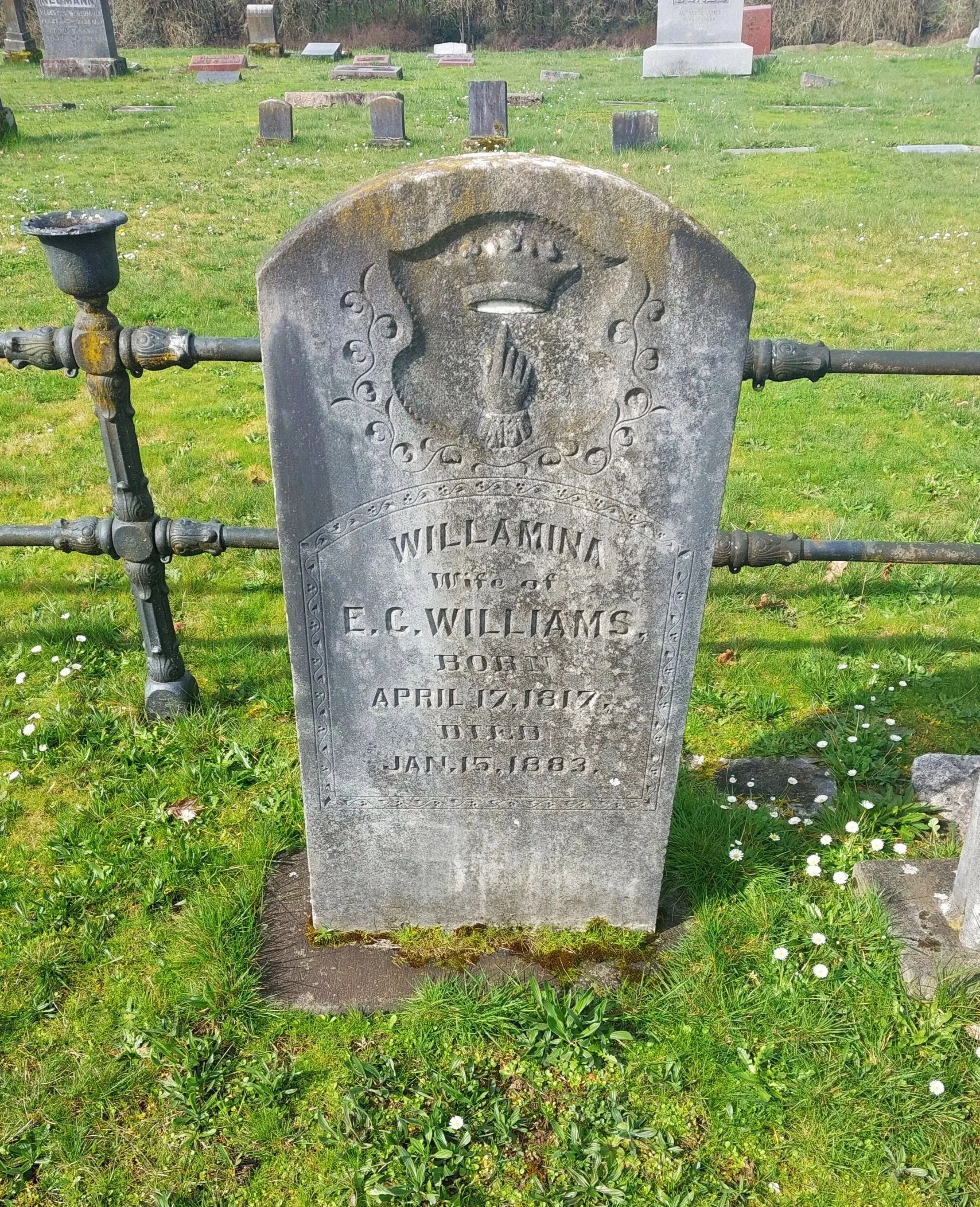
They Named a Town After Her
Reportedly the first pioneer woman to cross the Willamette River, ca. 1846, Willamina married Enos Williams after her first husband died. The nearby town of Willamina is named after her.
VOICES OF AMITY
Stories in Their Own Words
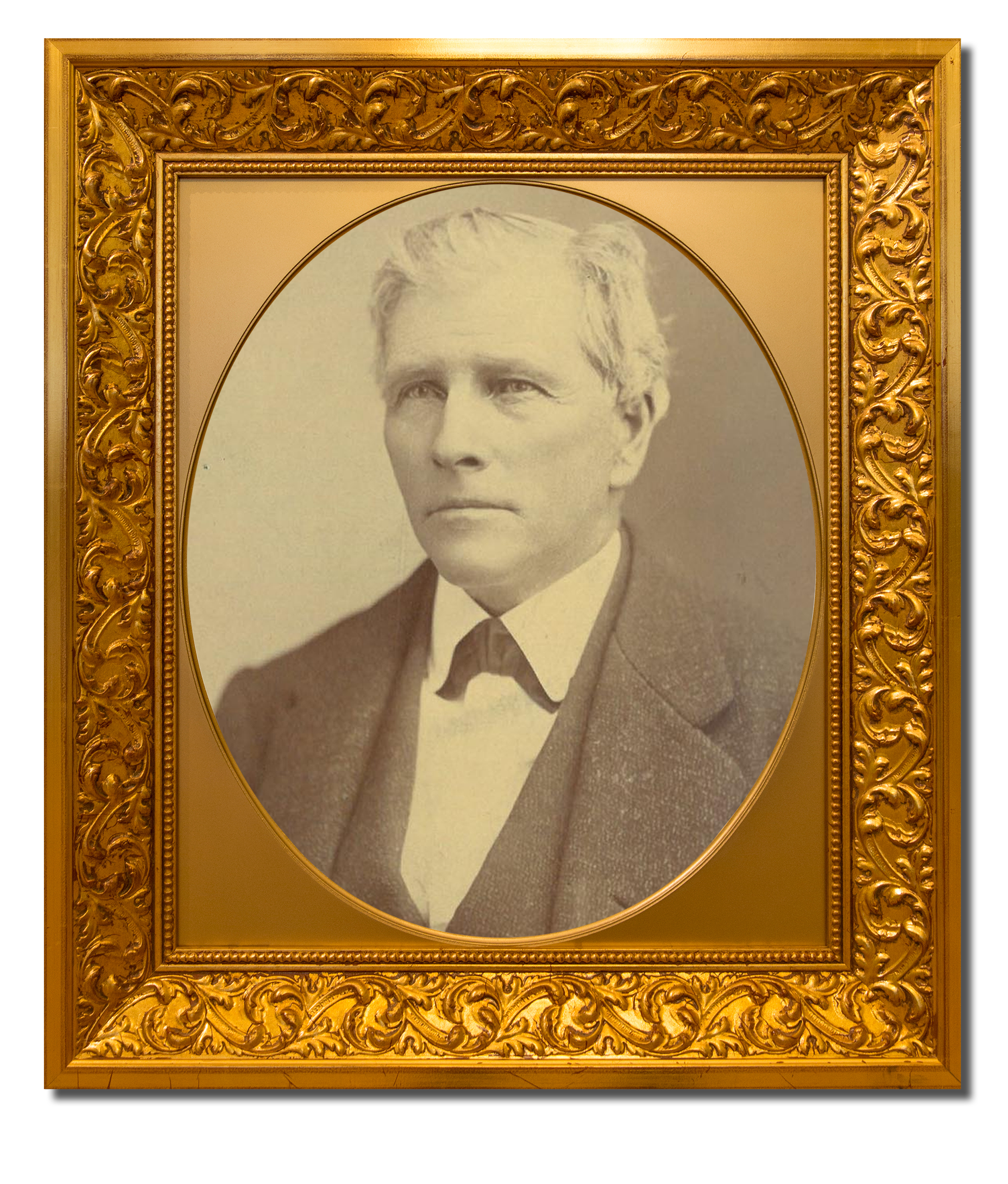
Joseph Watt
Pioneer Farmer and Wool Producer
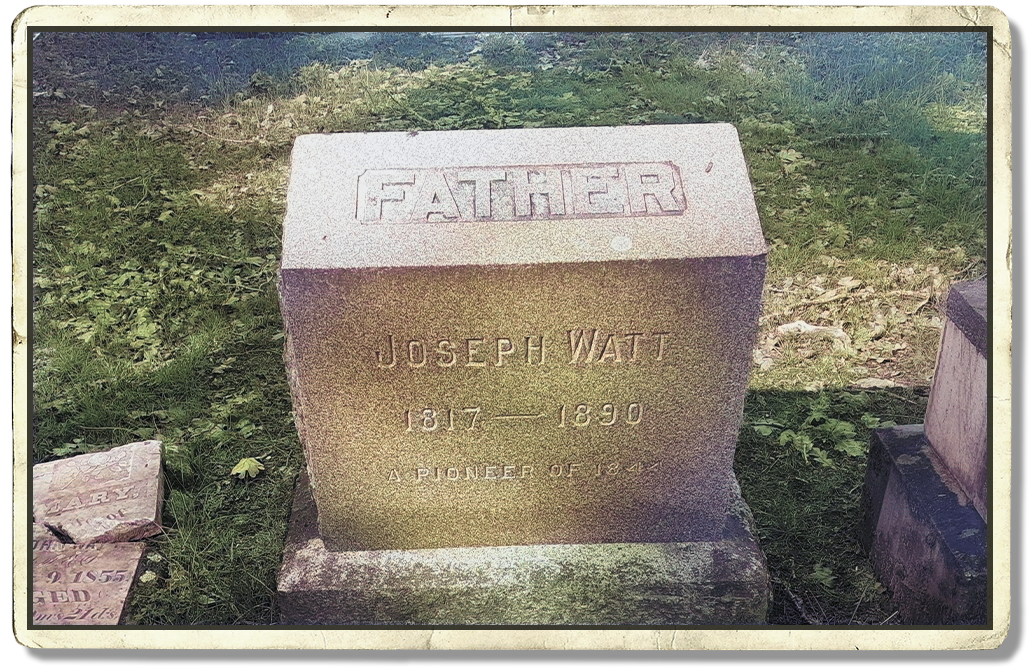
Joseph Watt (1817–1890) was an Oregon pioneer, farmer, and industrialist who settled in Yamhill County and helped shape Amity’s early development. He brought one of the first large flocks of Merino sheep to the Willamette Valley, helped establish Oregon’s early wool industry, and opened new markets for Oregon wheat and wool.
In 1865, Watt platted an addition to the growing town of Amity, where his family had deep roots. He died in 1890 and was laid to rest in Amity Cemetery, connecting his remarkable life directly to the community he helped build.
Joseph Watt: Oregon Historical Society
INTERACTIVE MAP
Find Your Next Stop
Discover Amity, one stop at a time. Click or tap a marker, then scroll down in the popup and select Learn More to explore that location’s story.